Night markets in Singapore: honest guide 2026
Singapore: Chinatown night tour — dinner, trishaw & boat ride
Does Singapore have good night markets?
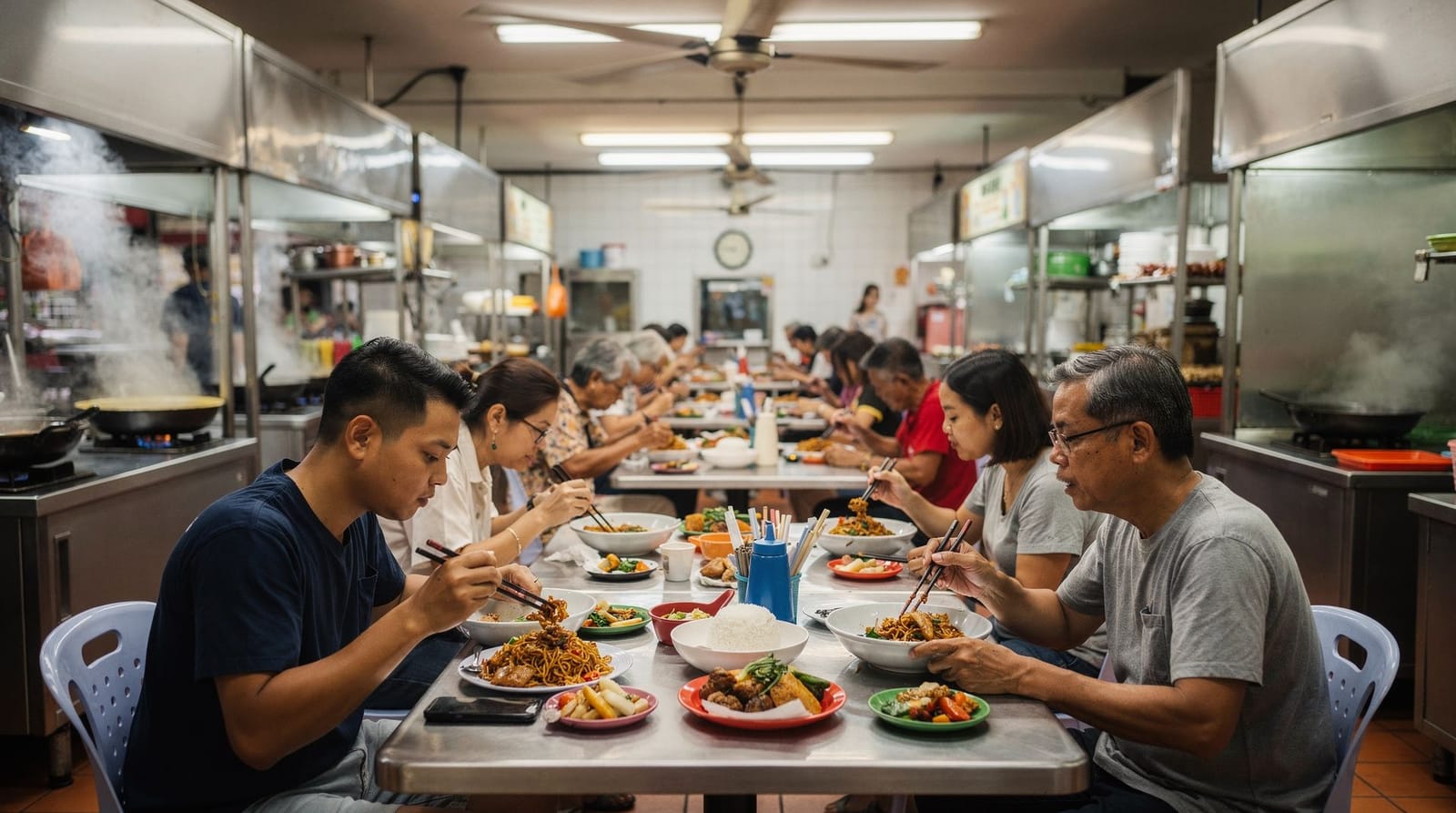
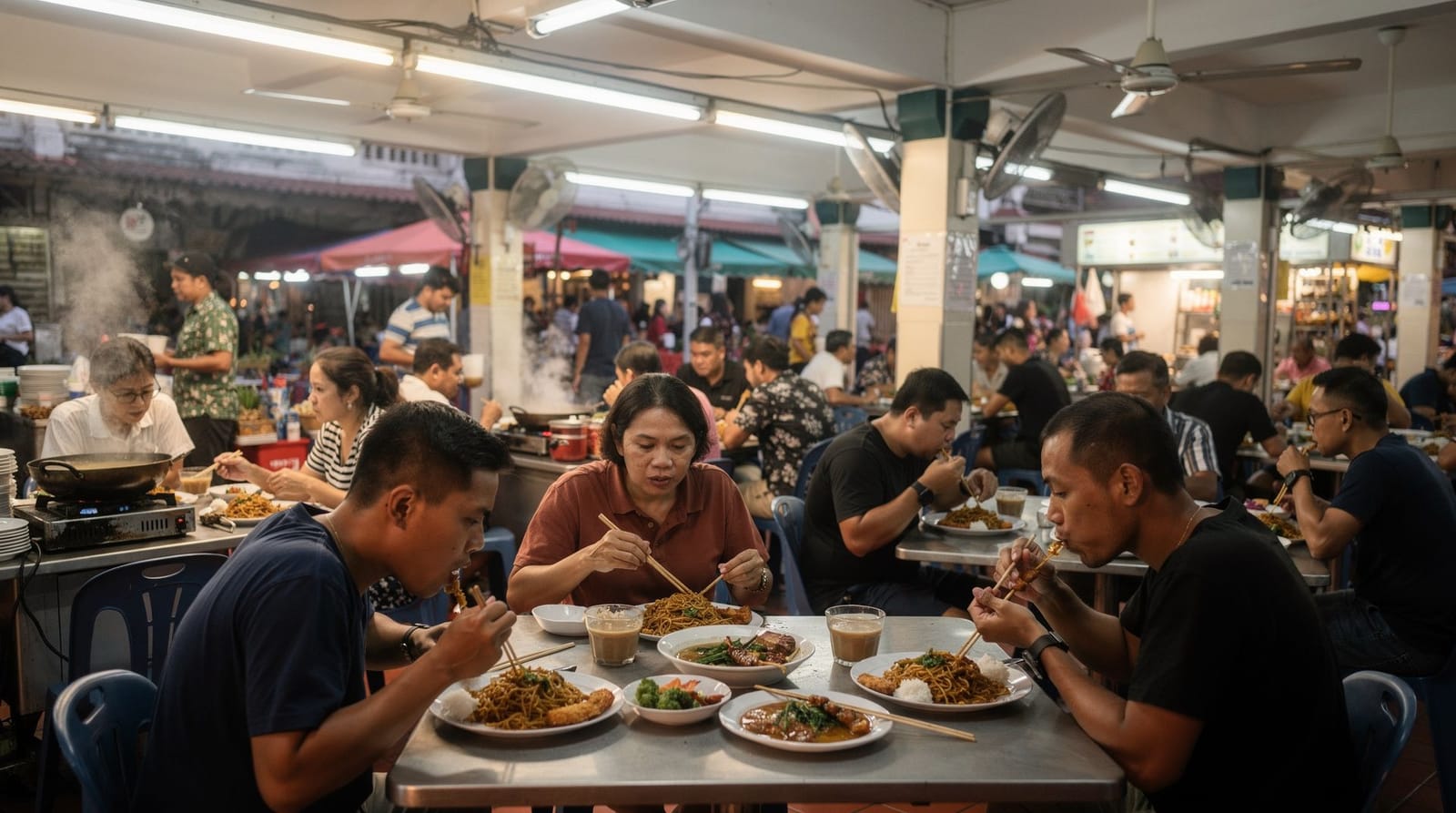
Singapore's night market scene is smaller than Bangkok or Taipei but genuinely worthwhile. The best are Lau Pa Sat (permanent hawker-style night market, open until 2 am), the Geylang Serai Pasar Malam (seasonal, during Ramadan and festive periods), and the Chinatown night bazaar along Pagoda Street (permanent evening stalls). For the authentic pasar malam experience, timing your visit around Ramadan or the festive season is best.
Quick answer: Singapore’s best night market experiences are Lau Pa Sat’s outdoor satay street (from 7 pm, permanent), Chinatown’s Pagoda Street evening stalls (permanent tourist market), and the Geylang Serai Pasar Malam (seasonal, best during Ramadan). For pure street food at night, Geylang and Old Airport Road cover more ground than any formal night market.
| Permanent option | Lau Pa Sat / Boon Tat Street satay, from 7pm |
| Best seasonal | Geylang Serai Pasar Malam (Ramadan) |
| Typical cost | SGD 3–10 per food item |
| Getting there | Raffles Place, Chinatown, or Paya Lebar MRT |
| Bring | Cash for small stalls, though PayNow/SGQR works widely |
Night markets in Singapore: setting expectations
Singapore does not have the sprawling night markets of Bangkok’s Chatuchak or Taipei’s Raohe Street. The city’s strict food hygiene regulations, high land costs, and well-developed hawker centre system have absorbed much of what would be informal street vending in other Southeast Asian cities.
What Singapore does have: a handful of genuinely atmospheric night market events tied to its multicultural festival calendar, a permanent satay street next to a Victorian cast-iron pavilion, and a Chinatown night bazaar that mixes tourist shopping with good street snacks. The key is knowing what is permanent, what is seasonal, and what is worth your time.
Lau Pa Sat and Boon Tat Street satay: the permanent night market
Location: 18 Raffles Quay (Lau Pa Sat) / Boon Tat Street, Raffles Place
MRT: Raffles Place (East-West and North-South Lines)
Hours: Satay stalls on Boon Tat Street typically from 7 pm until 2 am
Best for: Satay, evening street food, atmospheric setting
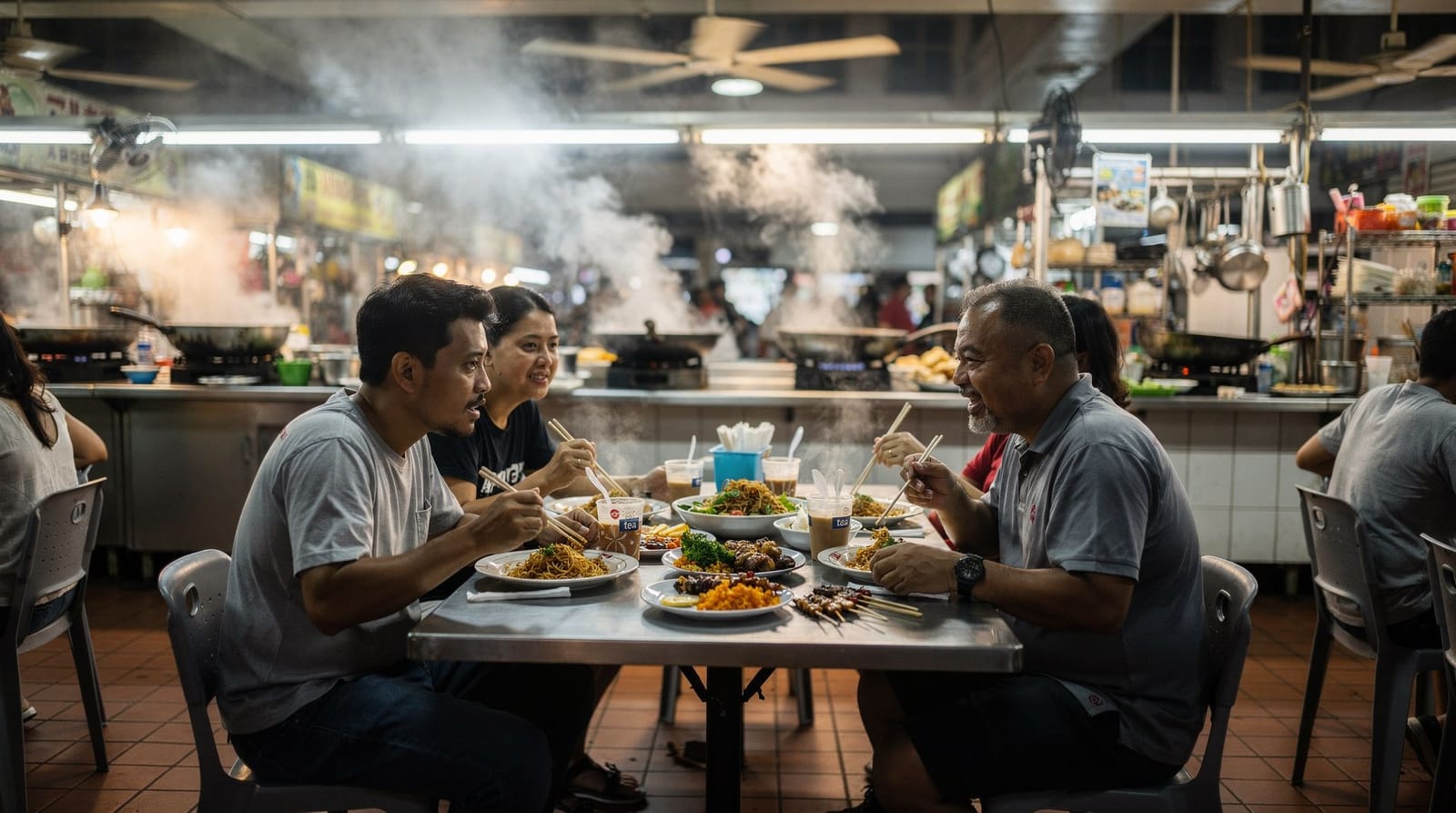
Lau Pa Sat (Telok Ayer Market) is a Victorian octagonal cast-iron market hall, originally built in Glasgow in 1894 and reassembled in Singapore. During the day, it operates as a standard hawker centre with stalls selling Chinese, Malay, and Indian food. In the evenings, from approximately 7 pm, the adjacent Boon Tat Street (a section of road closed to traffic) fills with satay stalls — dozens of vendors setting up portable grills along the street, filling the air with the smoky char of skewered chicken, pork, mutton, and prawns.
The satay: SGD 0.80–1.00 per stick at most stalls (minimum order usually 10 sticks). Served with compressed rice cake (ketupat), raw cucumber and onion, and peanut sauce. The best satay stalls are those with the most active grills — the turnover keeps the meat from drying out. Competition among the Boon Tat Street stalls is intense and quality is generally high.
The setting: The combination of the ornate Victorian pavilion, the satay smoke, the street tables, and the CBD towers behind makes Boon Tat Street at night one of Singapore’s most atmospheric food experiences. It is not a quiet neighbourhood moment — the CBD after-work crowd arrives from 7 pm — but the energy is good. See Lau Pa Sat guide for the full hawker centre review.
Practical: Sit at any of the tables along Boon Tat Street and a satay vendor will approach to take your order. Prices are fixed and displayed. The indoor Lau Pa Sat hawker stalls are open simultaneously — useful for dishes that are not available on the satay street (chicken rice, fried noodles, char kway teow).
Chinatown night bazaar: permanent tourist market
Location: Pagoda Street, Smith Street, Trengganu Street, Chinatown
MRT: Chinatown (Downtown and North-East Lines)
Hours: Evening stalls from approximately 6 pm until midnight (permanent)
Best for: Souvenirs, snacks, atmosphere
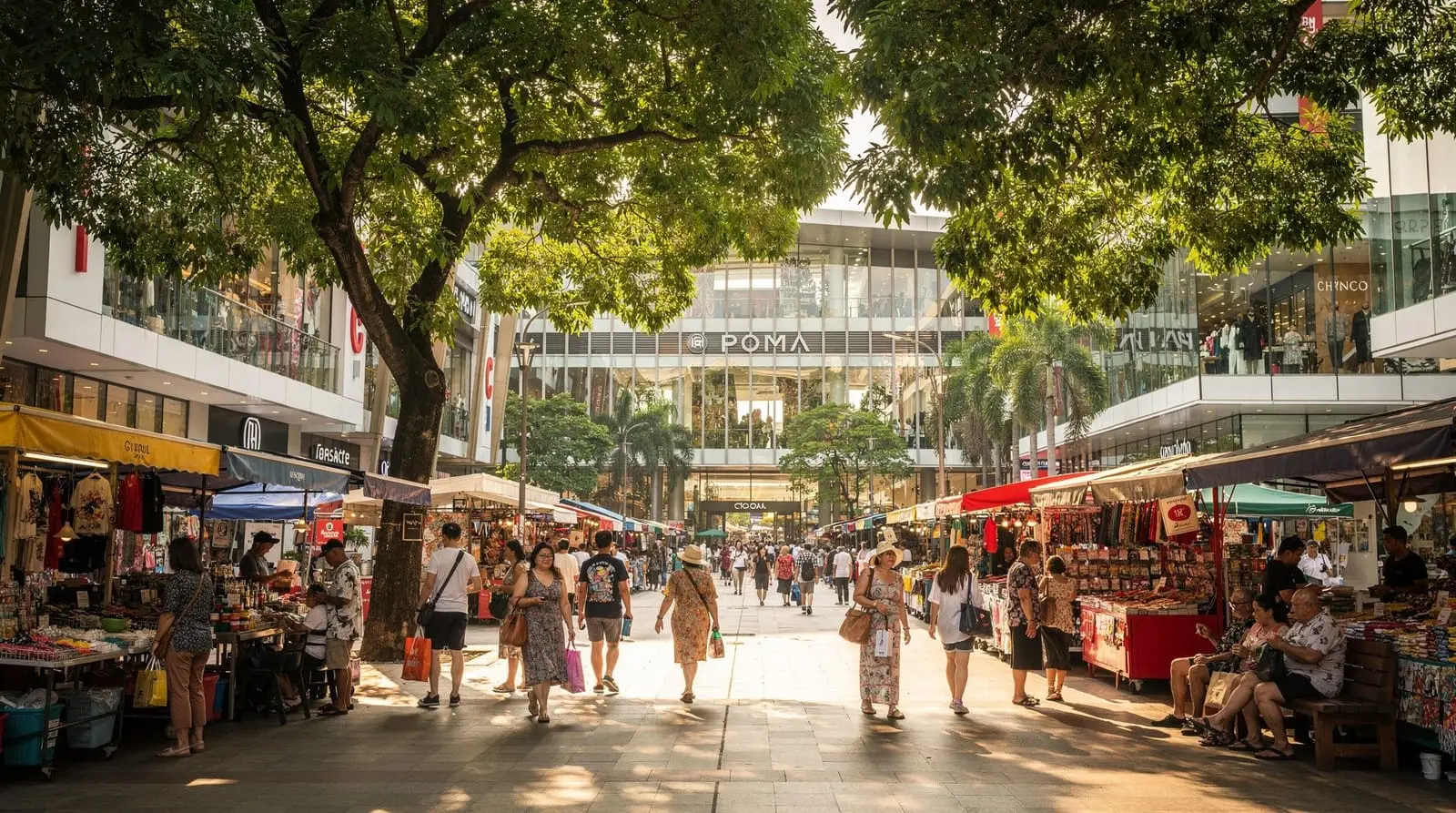
Chinatown’s network of streets around Pagoda Street runs permanent evening stalls — souvenir vendors, dried goods shops, and food stalls that ramp up activity from around 6 pm when the heat eases and the tourist and local foot traffic increases. The setting is Singapore’s most intact historic shophouse district: red lanterns, colourful tiles, and the ornate facade of the Sri Mariamman Temple at one end.
What to buy: The souvenir market has the usual range — Merlion figurines, Singapore-branded items, kopi (coffee) products, snacks. Bargaining is expected at the souvenir stalls. The dried goods shops (pork floss, bak kwa) are more interesting.
What to eat: The Smith Street hawker centre (Chinatown Complex) is nearby for genuine hawker food. Along the street stalls, roasted chestnuts, durian (seasonal, pungent), and various snacks are available. The Chinatown Singapore covers the food options in detail. See also Durian in Singapore if durian is on your list.
Honest assessment: Chinatown’s night bazaar is a tourist market rather than a genuine local pasar malam. The shopping is standard, the prices require negotiation, and the atmosphere, while attractive, is produced rather than organic. Worth walking through as part of a Chinatown evening; not a special destination in itself for experienced travellers.
Singapore: Chinatown night tour — dinner, trishaw & boat rideGeylang Serai Pasar Malam: the real thing (seasonal)
Location: Geylang Serai, Geylang Road
MRT: Paya Lebar (East-West and Circle Lines), then a short walk
When: During Ramadan (approximately March 2026 — check dates) and around Hari Raya Aidilfitri
Best for: Authentic Malay night market, Ramadan bazaar atmosphere
The Geylang Serai Pasar Malam during Ramadan is Singapore’s most atmospheric genuine night market. Geylang Serai is Singapore’s traditional Malay quarter — a community market and residential area that has been the heart of Malay cultural life in Singapore since the 19th century. During Ramadan, the entire area transforms.
The market runs from mid-afternoon (Muslims break fast at sunset, approximately 7 pm) through the evening, selling: Malay kueh (a vast variety of steamed and fried rice flour snacks), grilled seafood and satay, ramly burgers (a unique Malaysian-Singapore style burger with egg), roti john (a Malay egg-and-sardine omelette sandwich), sweet drinks, and festival clothing and goods.
The atmosphere: Thousands of people pack the streets in the evenings — families coming to buy food for breaking fast, young people socialising, and non-Muslim Singaporeans attracted by the food and atmosphere. It is the closest Singapore gets to the immersive night market atmosphere of Kuala Lumpur or Bangkok. Food is priced for locals (SGD 3–8 for most items).
Honest note: This is a Ramadan event — the mood is community-oriented and the timing revolves around the end of the fast. Non-Muslim visitors are entirely welcome and the event is strongly encouraged, but awareness of the cultural context is appropriate. Eat and drink normally; it is not expected that visitors observe the fast.
If you cannot visit during Ramadan: The Geylang Serai area has a permanent wet market and some evening food stalls year-round, but the full pasar malam only operates seasonally.
Little India night stalls: the everyday alternative
Outside of the Deepavali build-up, Little India’s Serangoon Road and Tekka Centre area still offers a more everyday version of evening market energy than Chinatown’s tourist-focused stalls — flower garland sellers stay open into the evening, and the sari and spice shops along Campbell Lane keep their shutters up well past dark. It’s not a formal “night market” by name, but the sensory experience — colour, spice smells, and the steady stream of shoppers — is closer to an organic South Asian bazaar than anything in Chinatown’s curated stretch. Pair it with dinner at Tekka Centre for a low-cost, high-atmosphere evening; see Little India Singapore for the fuller neighbourhood picture.
Bugis Street market: tourist shopping with some evening energy
Location: 3 New Bugis Street (between Victoria Street and Rochor Road)
MRT: Bugis (East-West and Downtown Lines)
Hours: Generally 11 am to 10 pm daily
Best for: Budget fashion shopping, tourist market
Bugis Street is a permanent covered market selling budget fashion, accessories, and miscellaneous goods. It is a popular destination but is a market hall, not a night market in the traditional sense. The evening hours (after 7 pm) are when the surrounding Bugis area comes alive more broadly — the Kampong Glam and Haji Lane area nearby has better food and bar options.
Night food at Geylang: not a market but worth knowing
Geylang (the neighbourhood, distinct from Geylang Serai) is Singapore’s most famous late-night food area — a red-light district that doubles as a destination for late-night durian, seafood, and Cantonese congee. The geylang area operates until 3–4 am and is where local Singaporeans go for midnight food.
Not a market in the conventional sense — it is a strip of restaurants, durian stalls, and food hawkers operating along Geylang Road and its lanes. The atmosphere is rawer than Singapore’s curated attractions. Worth knowing about if late-night food is a priority.
Singapore at night & street food tourWhere night markets fit in a wider evening
A night market rarely needs a whole evening to itself. Most of the places above sit close to other things worth doing after dark, so it helps to pair them rather than treat each as a destination. Chinatown pairs naturally with a slow dinner at Chinatown Complex and a look at Sri Mariamman Temple, while the Chinatown destination page shows how the streets connect. Raffles Place and the satay street sit a short ride from Marina Bay after dark, which makes a good second half to the night once you have eaten.
If you are building a food-led trip, the night markets are one layer among several. The best hawker centres, the hawker etiquette and chope guide and the must-try dishes cover the rest of the picture, and Old Airport Road Food Centre is a useful late-evening alternative when the markets feel too staged. Travellers on a tight budget will find more ideas in Singapore on a budget and best cheap eats.
A few habits make any of these evenings easier:
- Go hungry and share. Several small plates from different stalls beat one large meal at a single stall.
- Ask for the halal or vegetarian options up front if you need them; the halal food guide and the vegetarian guide explain what to look for.
- Bring something light to wear and keep water with you, since the evening heat lingers after sunset.
- Keep your route simple. The MRT guide and getting around Singapore cover how to move between the stops without a taxi.
Travelling with children changes the plan slightly. The Boon Tat Street satay stalls are lively but manageable, and kid-friendly hawker options are easy to find at the indoor stalls. If you are staying near Kampong Glam or Bugis, the Bugis street markets guide and the Bugis destination page help you decide how much of the area to fit in. For a broader view of the Little India stretch mentioned earlier, the Little India destination page and the Deepavali guide add context, and Geylang Serai and the surrounding area is worth reading before a late-night food trip.
Timing your trip around a seasonal market
If a genuine pasar malam atmosphere matters more to you than any single attraction, it’s worth checking the Ramadan and Chinese New Year calendars before you book flights, rather than treating them as a bonus if they happen to line up. Ramadan shifts roughly 10–11 days earlier each year, so 2026 dates differ from 2025 — confirm on the Muis (Islamic Religious Council of Singapore) calendar before finalising travel dates if the Geylang Serai market is a priority. Chinese New Year is fixed relative to the lunar calendar (17–18 February 2026) and the Chinatown build-up typically runs for the two to three weeks beforehand, giving a wider booking window than Ramadan’s single-month event. Deepavali in Little India has the widest lead time of the three, with Serangoon Road’s light-up and market stalls building for most of October into early November.
Deepavali and Chinese New Year markets: seasonal highlights
Deepavali (Little India): In the weeks before Deepavali (October/November — check 2026 dates), Little India’s Serangoon Road and surrounding streets fill with flower sellers, gold jewellery shops, and clothing vendors. The street lighting becomes elaborate. The evening atmosphere during this period rivals Geylang Serai for festive night market energy.
Chinese New Year (Chinatown): In the weeks before Chinese New Year (17–18 February 2026), Chinatown’s market intensifies — bak kwa (barbecued pork), mandarin oranges, festive decorations, and the full CNY shopping atmosphere. The evening crowds are dense and the area is illuminated with red lanterns and light installations. See Chinese New Year in Singapore.
After-dark food tours: the organised option
If you want a guided exploration of Singapore’s evening food scene — street food, hawker centres, and the areas described above — an organised after-dark food tour combines the Chinatown, Clarke Quay, and Singapore River areas into a single evening. These tours typically cover 3–4 food stops and provide historical context for the areas visited.
After-dark street food and nightlife tour — Chinatown, Clarke Quay and beyondBuilding a night-market-focused evening
If night markets are the priority rather than a side note, the most efficient route is Chinatown first — arrive by 6:30 pm while there’s still light for photos, browse Pagoda Street and eat at Chinatown Complex, then MRT to Raffles Place for Lau Pa Sat and the Boon Tat Street satay stalls by 8:30–9 pm, when the grills are in full swing. This combination covers the two permanent options in one evening without feeling rushed.
If your trip coincides with Ramadan or the weeks before Chinese New Year, drop one of the permanent stops and prioritise the seasonal market instead — Geylang Serai or Little India’s Deepavali build-up are genuinely once-a-year experiences that outrank the permanent options for atmosphere. For a fuller evening itinerary that folds night markets into a broader plan, see Singapore at night and Singapore sightseeing by night: the best evening experiences.
Frequently asked questions about night markets in Singapore
Is Singapore’s night market scene disappointing compared to other Asian cities?
Honest answer: compared to Bangkok (Chatuchak, Ratchada), Taipei (Shilin, Raohe), or Kuala Lumpur (Jalan Alor), Singapore’s regular night market offering is smaller and more curated. The permanent stalls at Chinatown and the satay street at Lau Pa Sat are atmospheric but limited in scope. Where Singapore compensates is the quality of the hawker centres (open late, consistent, regulated) and the seasonal festival markets. If night markets are a primary goal, the seasonal events during Ramadan or CNY are the ones worth timing your visit around.
Are Singapore night markets safe?
Yes. Singapore is among the world’s safest cities, and the public spaces where markets operate are well-policed. Normal awareness of your belongings (crowded markets attract pickpockets in any city) applies, but meaningful security risk is extremely low.
What is the best night market food to try?
Satay from Boon Tat Street satay stalls, followed by the satay seller’s grilled chicken wings. During Geylang Serai Pasar Malam: Malay kueh (particularly ondeh ondeh and pandan-based snacks) and roti john. In Chinatown at night: char kway teow from the Chinatown Complex food centre rather than the street stalls, which are more tourist-oriented. See What to eat in Singapore for broader food guidance.
Can I find vegetarian food at Singapore night markets?
Yes, with some navigation. Most hawker stalls serve meat-centred dishes, but vegetarian-friendly options are available — particularly at Indian food stalls, which commonly offer vegetarian curries, roti, and snacks. At Geylang Serai, look for kueh (most rice flour snacks are vegetarian). See Vegetarian food in Singapore for dedicated guidance.
Is there a night market at Gardens by the Bay?
Gardens by the Bay does not have a night market, but the outdoor gardens and Supertree Grove are open in the evenings and there is an outdoor food market event space (the Flower Field Hall area) that occasionally hosts events. The Gardens by the Bay covers the evening options.
Do Singapore night markets have ATMs?
The Chinatown, Bugis, and Geylang Serai markets are in areas with multiple ATMs nearby. Most stalls at permanent markets accept PayNow/SGQR mobile payment (standard in Singapore). Cash remains useful for the smallest stalls. Most MRT stations have ATMs nearby.
Top experiences
Bookable activities with verified prices and instant confirmation on GetYourGuide.