Kopi culture: Singapore's coffee tradition and where to drink it properly
There are roughly 150 words in the Singapore coffee ordering vocabulary, and if you don’t know them, what you get is kopi — which is fine and perfectly nice, but not necessarily what you meant to order. This is not a complaint. The richness of the kopi system is part of what makes it interesting, and understanding the structure of it changes how you drink coffee in Singapore from a passive exercise into something more active and rewarding.
| Where | Kopitiams in Chinatown, Tiong Bahru Market, Old Airport Road, Tekka Centre |
| Cost | Around SGD 1.20–1.80 for kopi; SGD 8–10 for a kaya toast set |
| Best time | 7am–9am, when kopitiams are at full working steam |
| Vocabulary | Kopi, kopi O, kopi C, siu dai / gah dai, peng (iced) |
| Pair it with | Kaya toast breakfast, then a hawker crawl later in the day |
Kopi — the word itself is Malay, borrowed from Dutch koffie — is Singapore’s traditional coffee culture, a tradition that runs through the coffee shops (kopitiams) that have anchored every neighbourhood in the city since the 19th century. These are not the artisan espresso bars that opened in Tiong Bahru and the CBD in the 2010s. They are older, louder, more democratic, and in most respects more interesting.
What kopi actually is
Singaporean kopi is brewed from Robusta beans (not Arabica) that have been roasted with butter and sugar — sometimes with the addition of cacao — giving the coffee a full-bodied, slightly caramelised flavour that is quite different from the sharp, clear acidity of specialty espresso. The roasting process is often done in large woks over charcoal, and the resulting beans produce a brew that is strong, sweet-edged, and deeply caffeinated.
The brewing happens through a cloth filter — a sock-like muslin bag through which near-boiling water is poured repeatedly, extracting a concentrated brew that is then either diluted with water or mixed with condensed milk or evaporated milk depending on the order. The kondensasi (condensed milk) versus carnation (evaporated milk) distinction is important: condensed milk makes the drink sweeter and richer; evaporated milk is less sweet and slightly thinner.
The ordering vocabulary
This is where it gets specific, and where knowing the system pays off.
Kopi — standard coffee with condensed milk, served hot. Kopi O — coffee with sugar but no milk (black coffee with sugar). Kopi O kosong — black coffee, no sugar. Kopi C — coffee with evaporated milk and sugar (lighter, less sweet than regular kopi). Kopi gah dai — extra sweet (more condensed milk). Kopi siu dai — less sweet (less condensed milk). Kopi peng — iced coffee. Kopi O peng — iced black coffee.
The same structure applies to teh (tea) with equivalent modifiers — teh, teh O, teh C, teh tarik (pulled tea, which aerates the drink by pouring it between two cups at height). Teh tarik is technically a Malay hawker tradition and is more common in Malay kopitiams than in Chinese ones, though it appears broadly now.
Price: kopi at a traditional kopitiam costs SGD 1.20–1.80. Iced versions (peng) typically cost SGD 0.20–0.40 more. This is the correct price. Anything substantially more than SGD 2.50 for a basic kopi is entering the territory of the cafes that know tourists are ordering.
Where to drink kopi properly
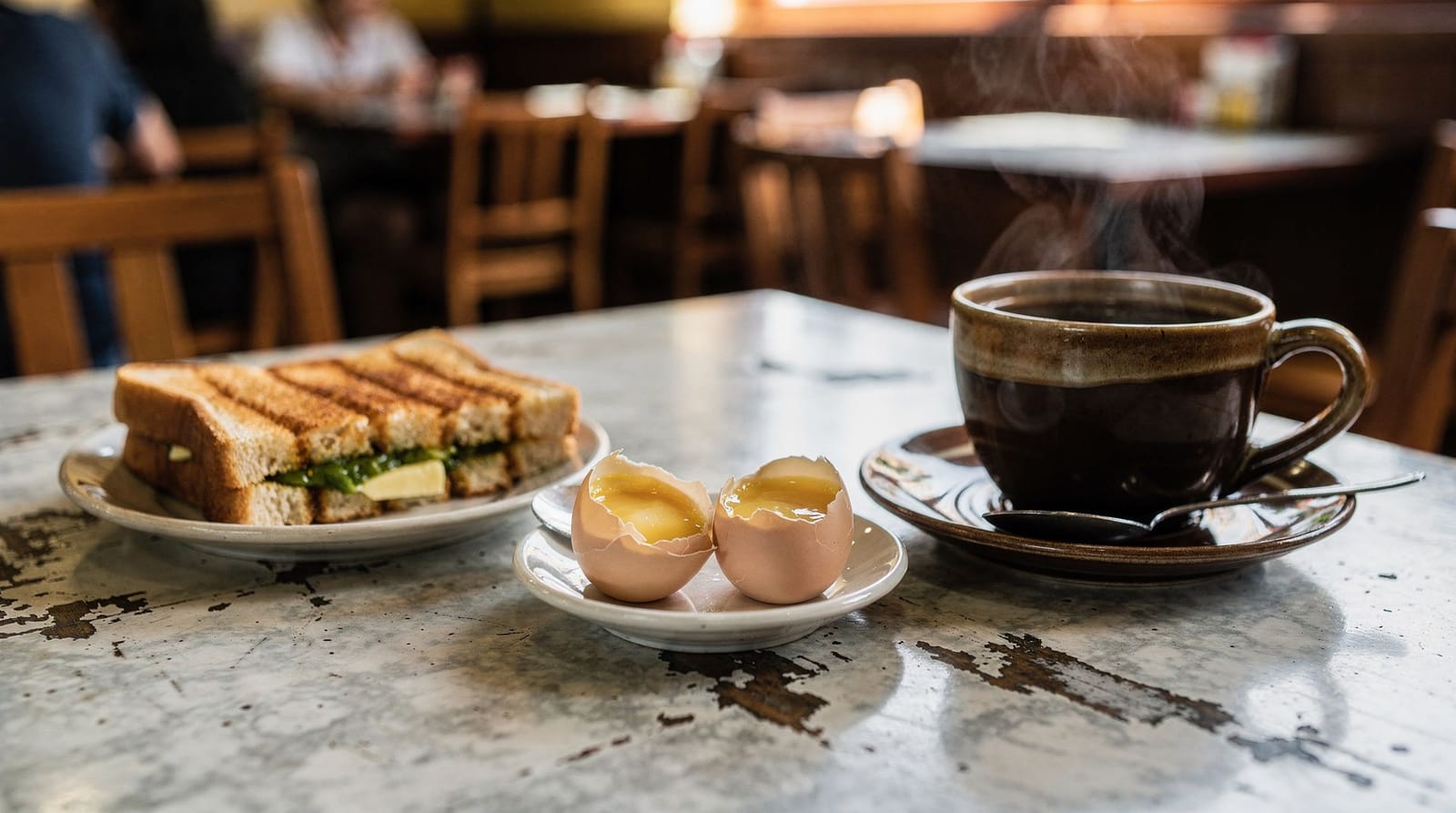
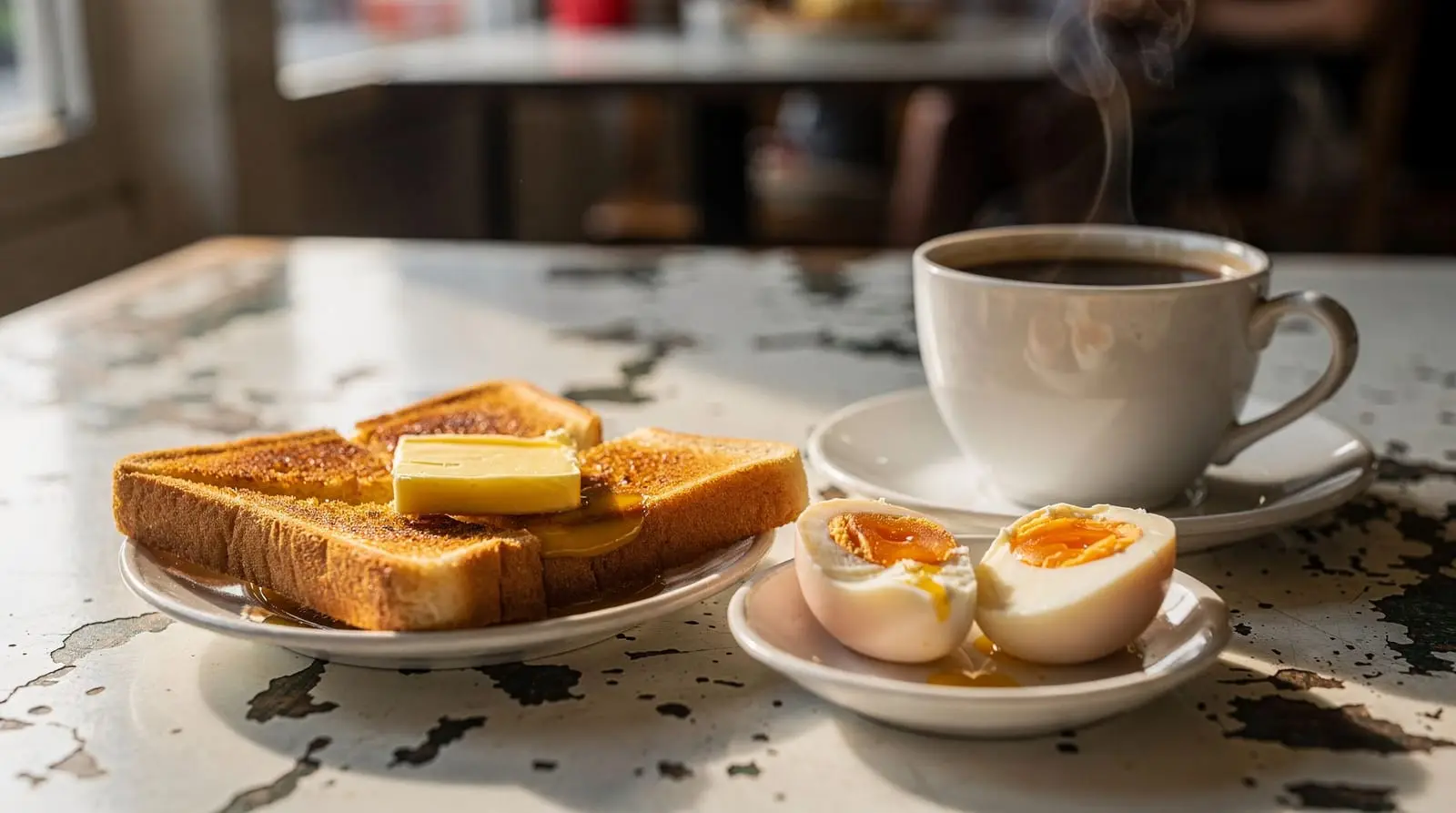
Yakun Kaya Toast is the most accessible starting point, not because it’s the most authentic but because it’s consistent, clearly signed, and specifically oriented around the kopi and kaya toast breakfast format. Kaya toast (bread toasted and spread with kaya — a coconut-egg jam — and a slab of cold butter), soft-boiled eggs with soy sauce and white pepper, and a kopi: SGD 8–10 for the full set. There are branches around the city, but the original stall in Far East Square (Chinatown area) is the one to visit.
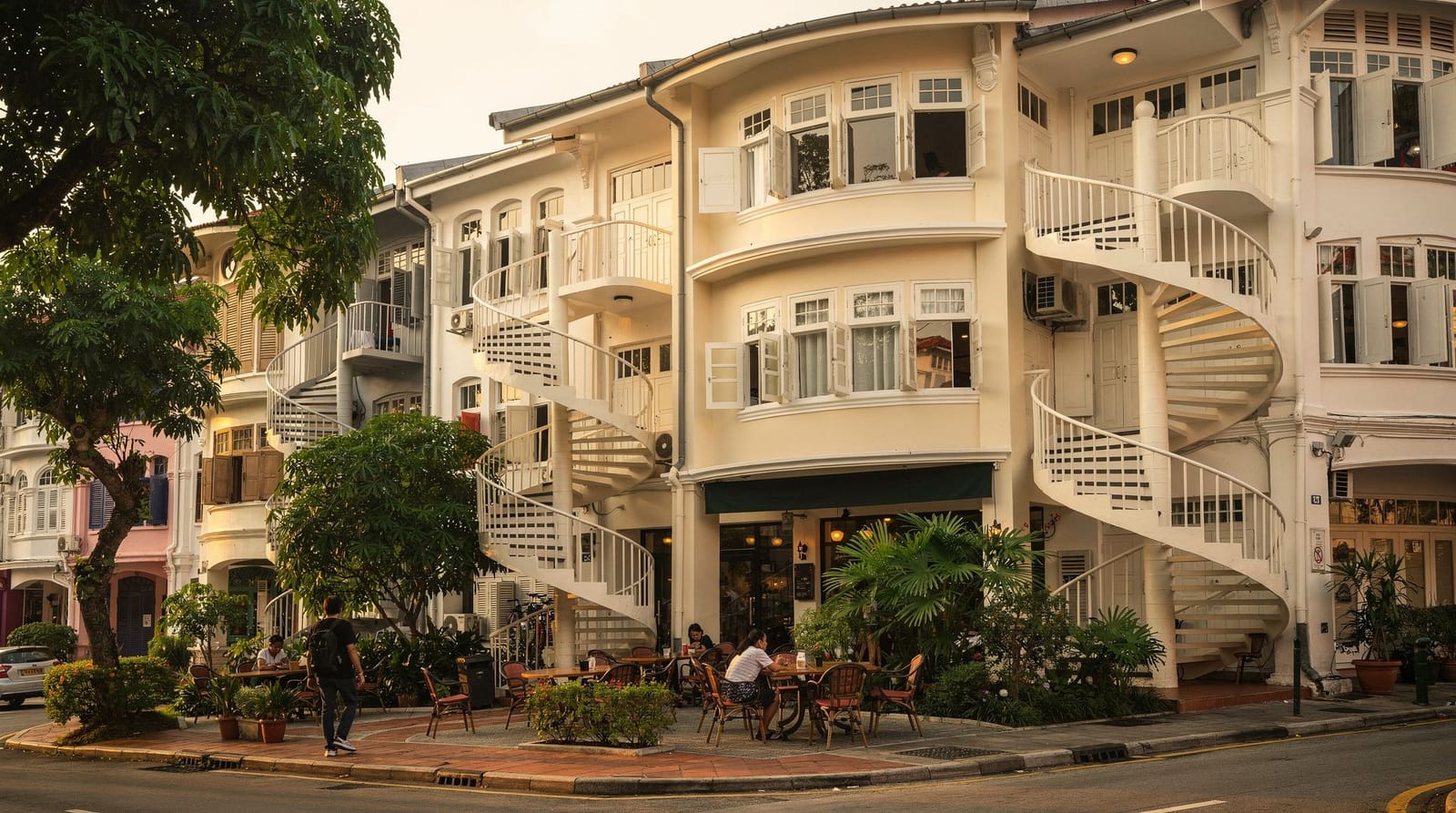
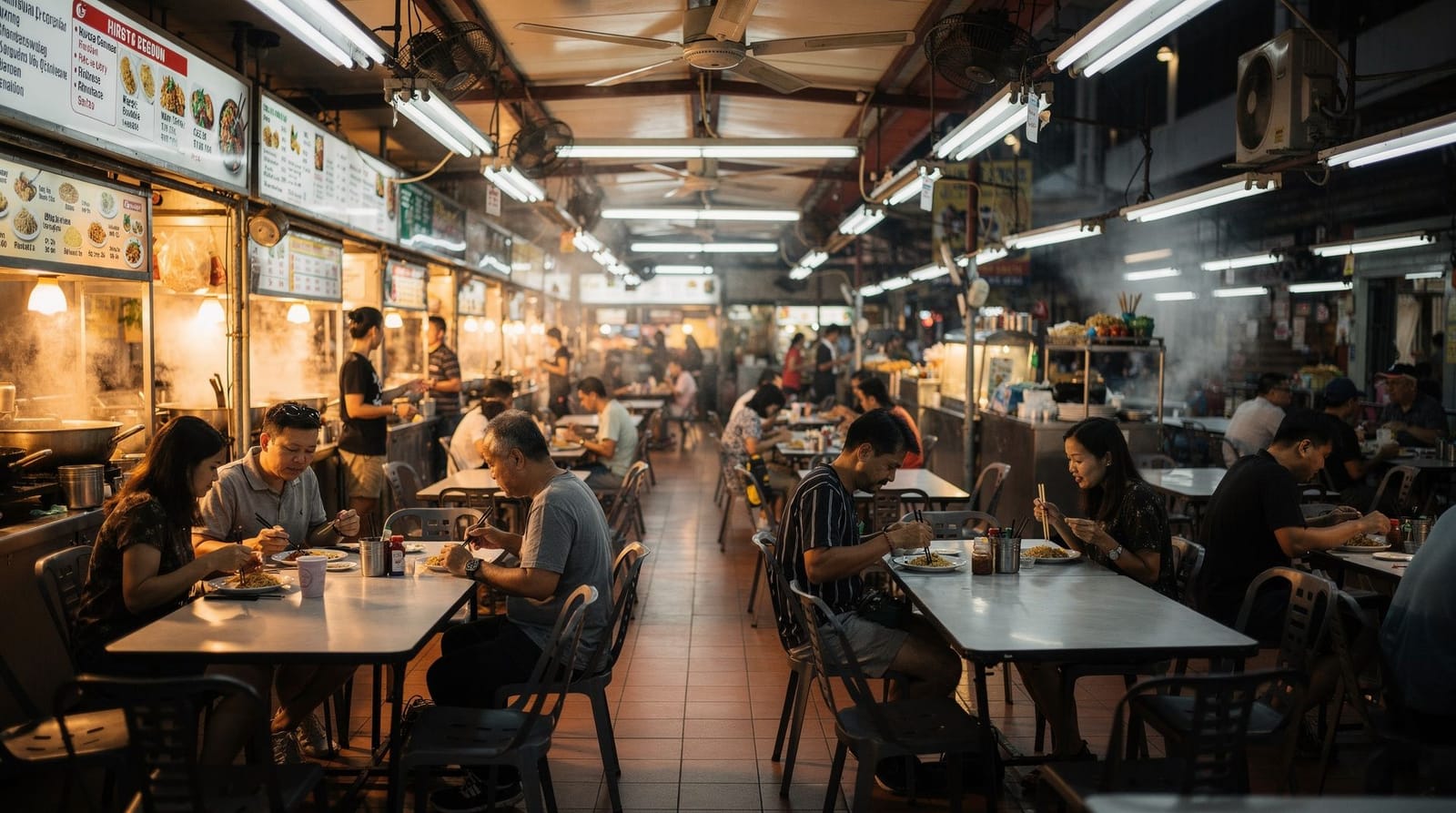
Tong Ah Eating House at the corner of Keong Saik Road and Teck Lim Road in Chinatown is a proper old-school kopitiam, operating in the same narrow shophouse since 1939. The wooden furniture, the overhead fans, the marble-topped tables — this is what the format looked like before shopping-mall renovations arrived. Kopi here is SGD 1.20 and you order at the counter.
Tiong Bahru Bakery confuses things slightly because it’s a French-Singaporean bakery that does excellent croissants alongside traditional kopi — but the kopitiam stalls that operate from the nearby Tiong Bahru Market are the authentic option. The market’s hawker centre second floor has a kopi stall with a queue from 7am and an open-air dining room that fills with morning regulars eating wonton mee and drinking their kopi O kosong while reading the Straits Times in print.
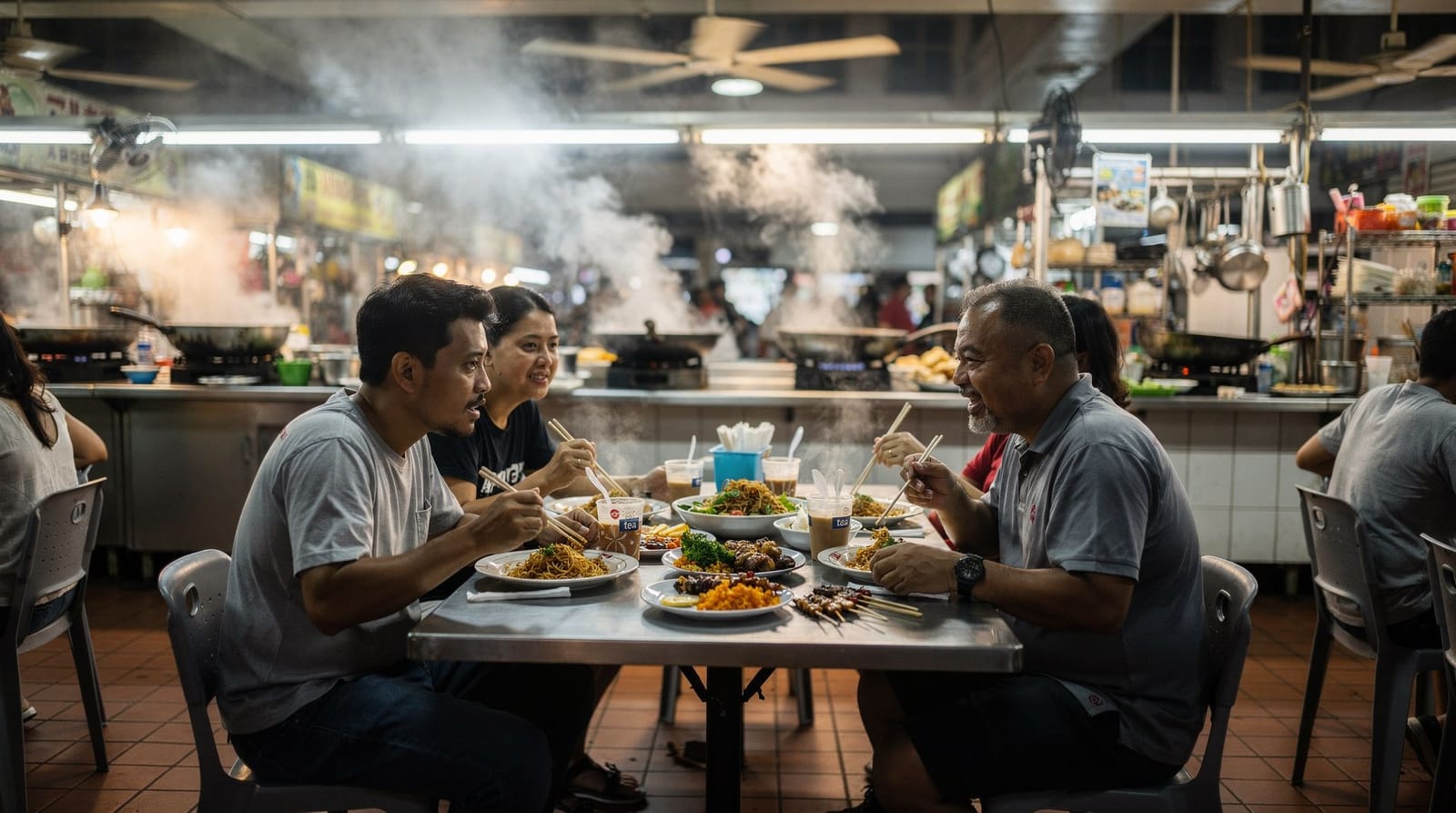
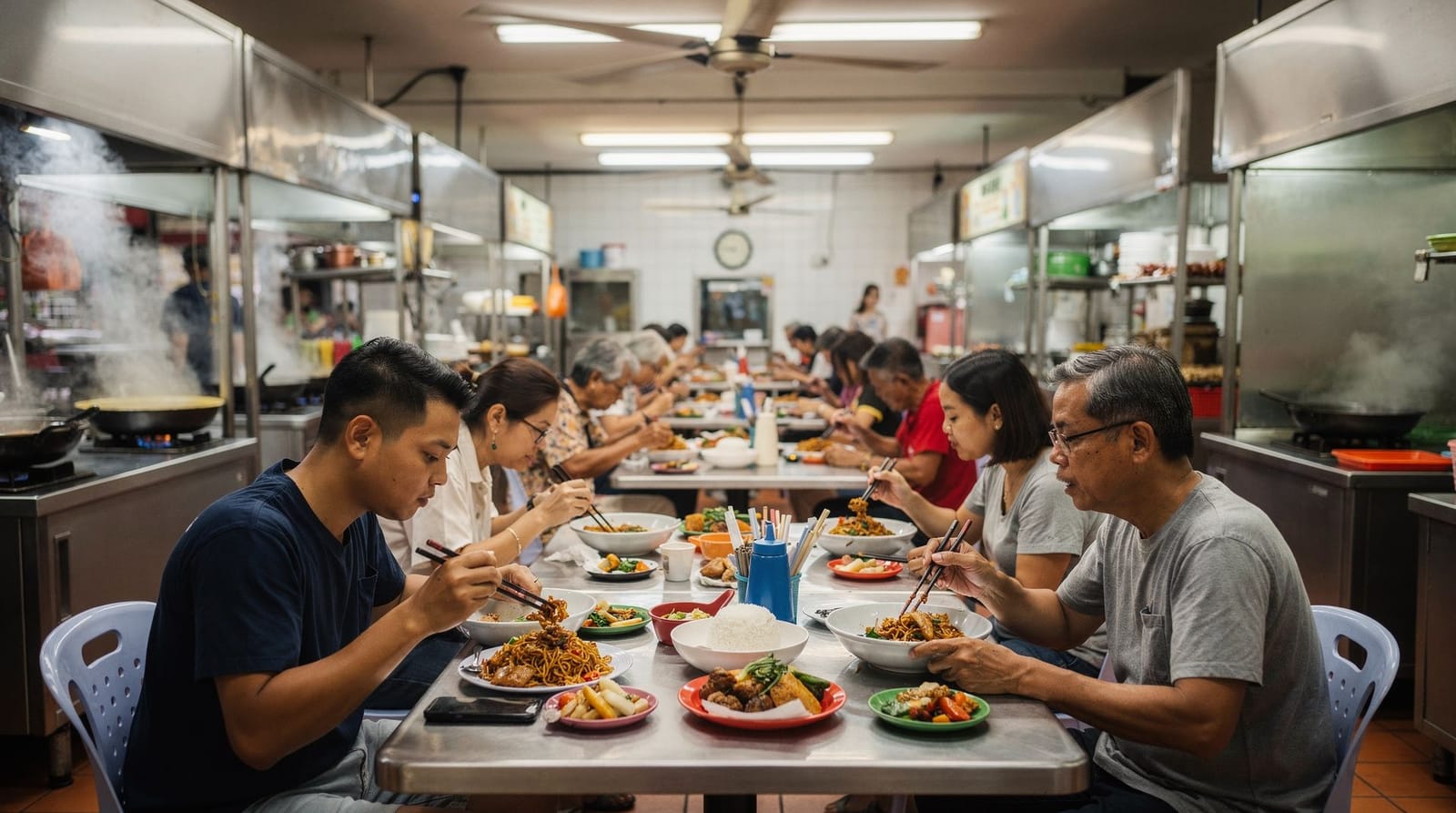
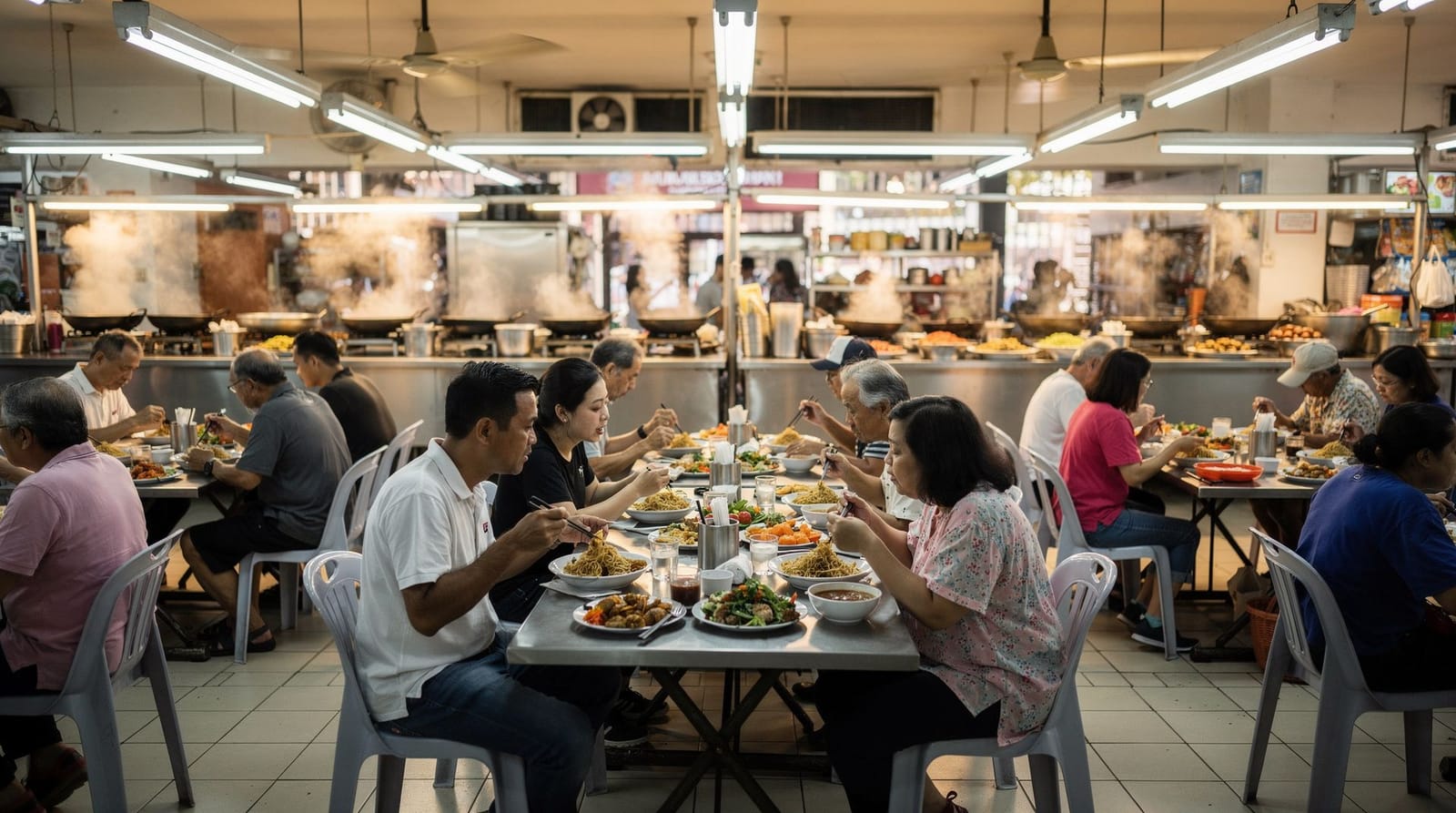
Old Airport Road Hawker Centre in the Geylang area has what I’d argue is the most pure kopitiam atmosphere in Singapore that’s also genuinely accessible to a non-resident — the morning hours between 7am and 9am, when the hawker centre is running at full steam and the kopi uncles are working three taps at once, is a very specific and completely Singaporean experience. See the kaya toast breakfast guide for the full pairing of kopi with the traditional breakfast set.
Singapore: city highlights tour with coffee and kaya toastTekka Centre in Little India has a kopi stall on the ground floor that operates alongside the wet market and the Indian food stalls — worth combining with a wander through the Little India guide if you’re already in the neighbourhood for breakfast.
How to actually order without embarrassment
The counter transaction moves fast, and the kopitiam auntie or uncle taking your order has heard every hesitant tourist mangle the vocabulary. The trick is to say it as one compound word rather than pausing between elements: “kopi-si-dai” rather than “kopi… siu dai… please.” Point at the menu board if one exists (most do now, bilingual), but ordering by voice is faster and gets you served quicker during the morning rush. Payment is usually cash at the older stalls, though PayNow QR codes have spread even to some of the most traditional operators.
If you get the order wrong, nobody minds — kopi at SGD 1.20–1.80 is cheap enough that a mis-ordered cup is not a real loss, and most stalls will happily remake it if you ask politely.
The kopitiam uncles and the living tradition
The people who make kopi at traditional kopitiams — typically older Chinese Singaporean men trained in the craft over decades — are the guardians of a technique that is not formally taught anywhere. The exact water temperature, the pressure of the pour, the time the grounds spend in the filter, the ratio of extract to milk: these are learned through apprenticeship and muscle memory.
The concern, discussed regularly in Singapore food journalism, is that the next generation is not learning the craft in the same numbers. Some kopitiams have already transitioned to machine-brewed kopi, which tastes different (and to purists, wrong). A few establishments — the Tong Ah format, certain stalls at Tiong Bahru and Tekka markets — remain committed to the hand-brew method.
Drinking at one of these stalls is, in a small but genuine way, a participation in something that may not be here in exactly this form in another generation.
Specialty coffee alongside kopi
This is not a binary situation. Singapore’s specialty coffee scene — centred on Tiong Bahru, Dempsey, and the Telok Ayer area — is genuinely excellent by any global standard. Cafes like Nylon Coffee (Everton Park), Common Man Coffee Roasters (multiple locations), and Chye Seng Huat Hardware (Lavender) produce technically sophisticated espresso and filter coffee that would hold their own in Melbourne or Tokyo.
The interesting thing about Singapore is that these two traditions coexist without competing. You can drink a pour-over single origin at a Tiong Bahru cafe for SGD 9 at 9am and then sit at a marble kopitiam table in the same neighbourhood and drink a kopi O for SGD 1.20 at the same hour, and both are correct choices depending on what you want. Most Singaporeans who drink specialty coffee also drink kopi, just in different contexts.
The kopi, though, is the one that’s specific to here. It’s worth learning to order it.
Pairing kopi with the rest of your trip
Kopi works best as a fixed point in the day rather than a detour. If you are building a first visit, the first-timer itinerary leaves room for a slow breakfast, and a kopitiam stop fits naturally before you head out to the sights. Travellers on a tight schedule can slot the same ritual into a one-day plan without losing anything: the order takes a minute, and the cup sets the tone for the morning.
Coffee is also an easy way to read a neighbourhood. A cup in the shophouse streets of Chinatown feels different from one in Little India or around Tiong Bahru, because the regulars, the snacks on the counter and the pace of the room all change. Drinking in two or three of them gives you a sense of how varied the city’s everyday food culture really is.
If kopi is your entry point into local eating, the must-try dishes list and the best hawker centres guide are the natural next reads. Both help you decide what to eat alongside the cup, and hawker etiquette will keep you comfortable once you start sharing tables with locals.
Where kopi fits into a wider food day
Kopi is rarely the destination on its own — it’s the anchor of a breakfast or the punctuation mark after a hawker meal. Building it into a wider morning at Tiong Bahru Market or Chinatown Complex turns a quick coffee stop into a proper couple of hours of eating and people-watching. If you want a structured way to hit several stalls in one outing, the hawker crawl through Chinatown covers a route that naturally passes at least two good kopi counters.
Singapore: UNESCO hawker culture Chinatown food tasting tourTop experiences
Bookable activities with verified prices and instant confirmation on GetYourGuide.

Singapore: Universal Studios Singapore entry ticket

Singapore: Gardens by the Bay bundle entry ticket

Singapore: Night Safari and tram ride ticket

Singapore: S.E.A. Aquarium entrance ticket

Singapore: Singapore River cruise

Singapore: Marina Bay Sands observation deck e-ticket

Singapore: Sentosa cable car Sky Pass roundtrip ticket